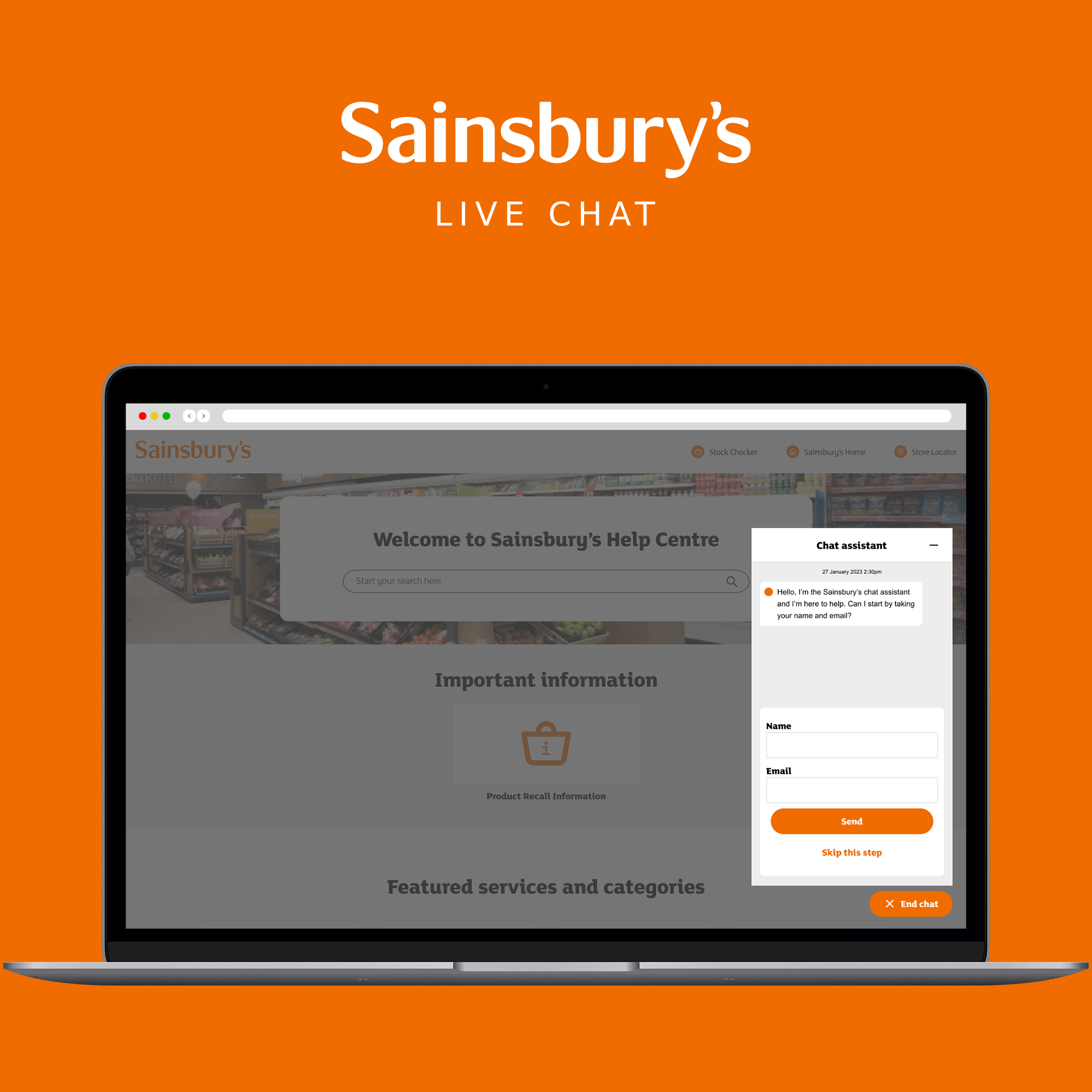
The brief was simple. The problem inside it wasn't.
Sainsbury's, Argos and Nectar each had completely different customer service setups — different platforms, different agents, different countries, different automation maturity. Nothing was connected. The plan was to build Sainsbury's Groceries live chat first, as a white-label, then migrate Argos and Nectar onto it once it was established.
So this wasn't "build a live chat." It was "build the foundation for a unified service layer across three major retail brands — each starting from a completely different place." My role was to define the strategy, manage C-suite and Director-level stakeholders, and make sure we were building the right thing before anyone wrote a line of code.
Three things had to be true at once
For customers
With multiple contact channels already available, live chat risked being noise. It needed to do something the other channels couldn't — not just exist.
For the business
The goal was to reduce cost per contact. A live chat that fails customers doesn't deflect call volume — it generates it. And decisions made now would set a precedent for Argos and Nectar when they eventually migrated across.
For the operation
The contact centre was under resourcing pressure. Leadership's solution: replace email with live chat and redeploy email agents — the easiest to retrain — into live chat support. Logical on the surface. But it rested on an assumption nobody had tested.
Finding the right scope quickly
With a 9-month end-to-end timeline, discovery had to be fast. We combined call volume data with customer research and an assessment of what we could realistically automate — producing a value vs effort matrix that shaped the initial MVP scope: automated journeys for refunds, product availability, store services and Nectar card queries.
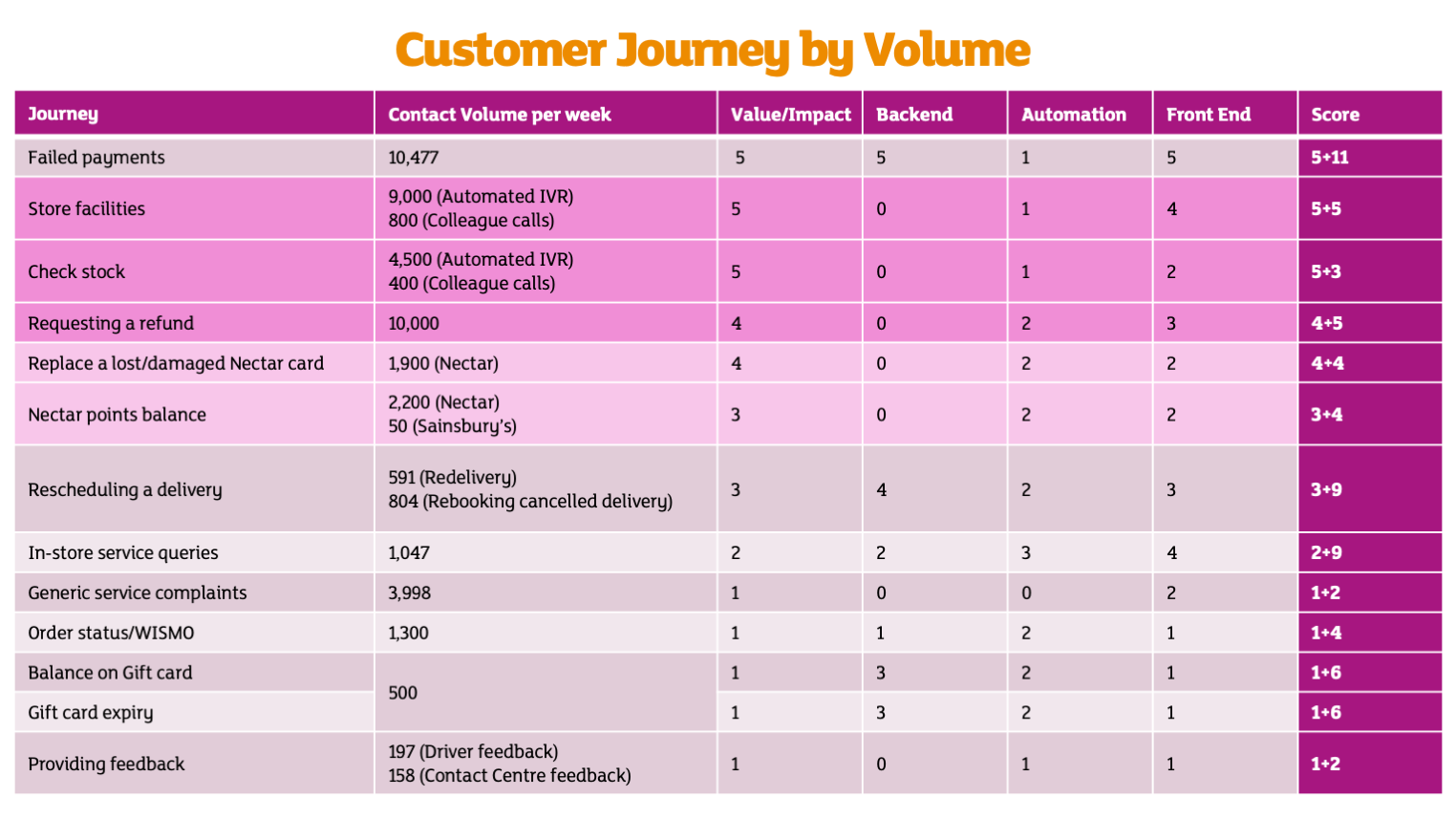
Customer journeys ranked by value, backend complexity, automation potential and front-end effort — forming the initial MVP scope.
But when I prototyped the experience, it became clear this would simply be an interactive search — every journey redirecting customers to existing self-service pages. There was nothing native to the chat. It wasn't a live chat; it was a signposting tool dressed up as one.
Stakeholders who'd been comfortable with the plan on paper changed their view immediately when they saw the prototype. The experience didn't meet customer expectations — and dealing with the fallout would cost more than building it right first time.
The assumption that could have broken everything
While we went back to redefine the scope, a separate decision was taking shape. Leadership wanted to replace email contact with live chat entirely — the logic being that email agents were the closest trainees to live chat support, making the resourcing transition cleaner. Shut email, redeploy the team, solve the staffing problem.
The problem: live chat couldn't handle what email handled. No image or media uploads. Only specific automated topics. Customers who normally emailed — with ad hoc, complex, evidence-heavy queries — would hit a wall on live chat and call instead. The channel meant to reduce cost per contact would spike the most expensive channel in the operation.
I needed data to make this case, and it wasn't readily available. I worked with the change management team to identify and pull the reason-for-contact breakdown from email.
Replacing email with live chat wouldn't redirect customers — it would strand them. Presented with this, the SLT could no longer use email agents as a ready-made resourcing solution. They had to find another way to staff live chat. Harder, but the right call. Email stayed open.
Building something worth having
With the hard constraints on the table and the launch date pressure removed, we could define an MVP properly. We kept the three highest-value Sainsbury's contact missions but redesigned them to be native to the chat — not redirects. I ran competitor analysis across B2C live chat to understand what good looked like, and workshops with agents, forecast planners and BI teams to make sure the operation was designing for reality, not an idealised version of it.
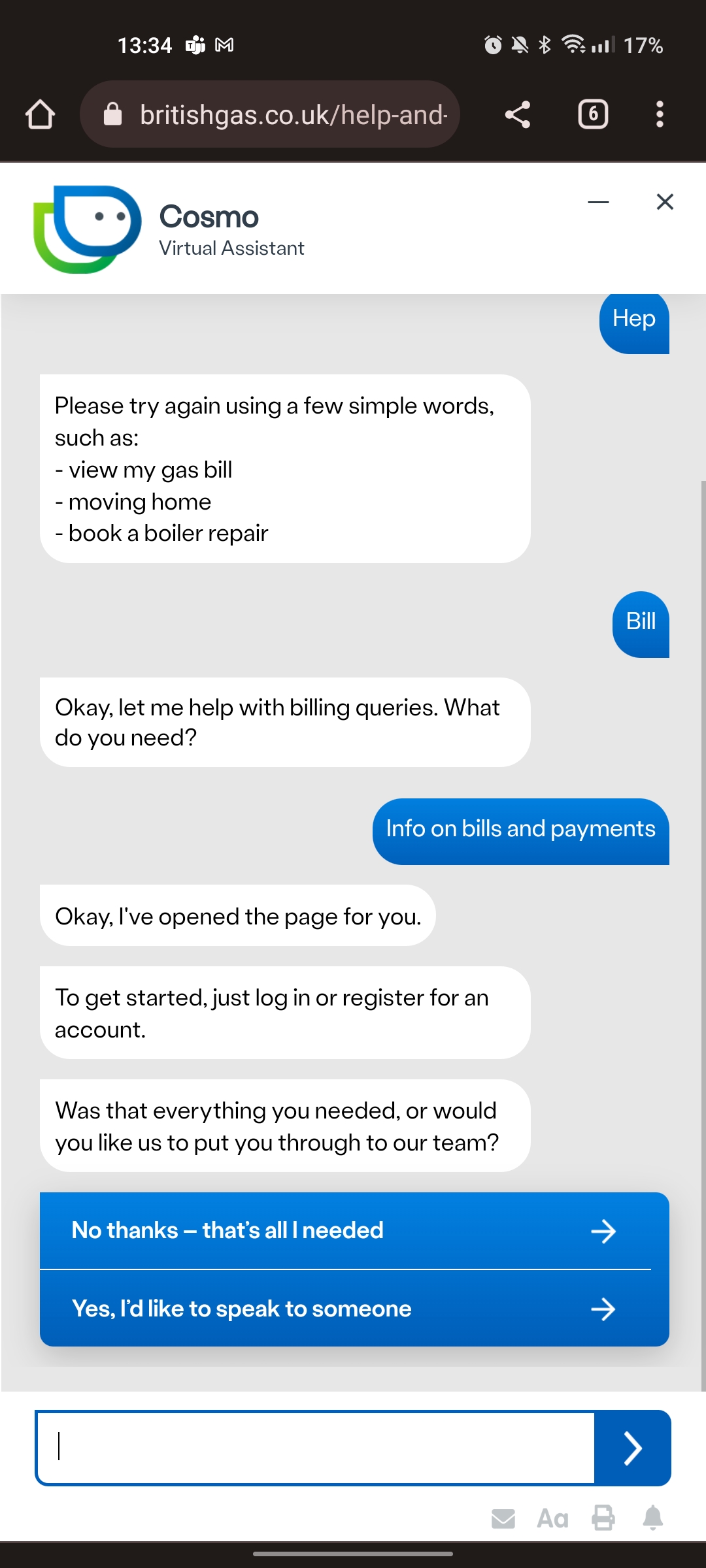
British Gas — Cosmo
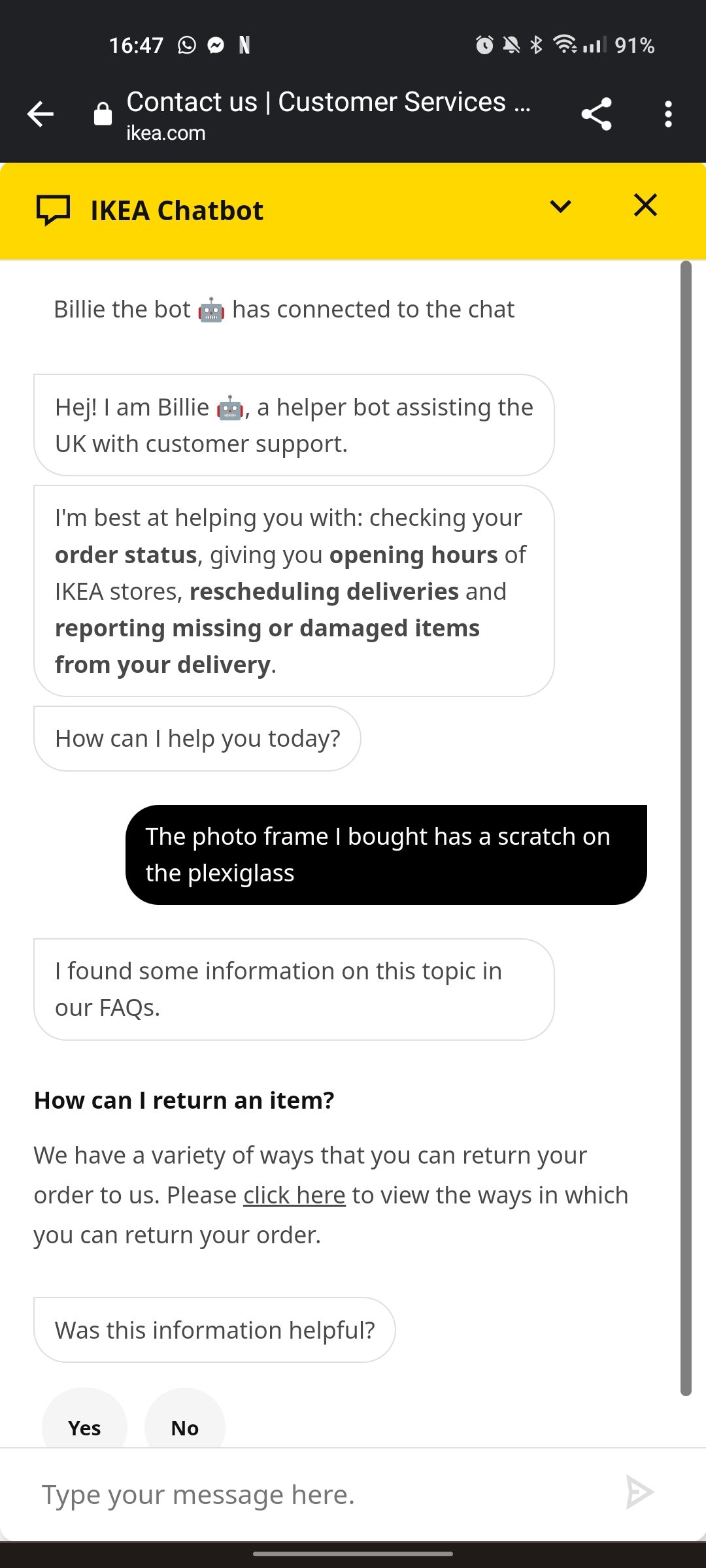
IKEA — Billie
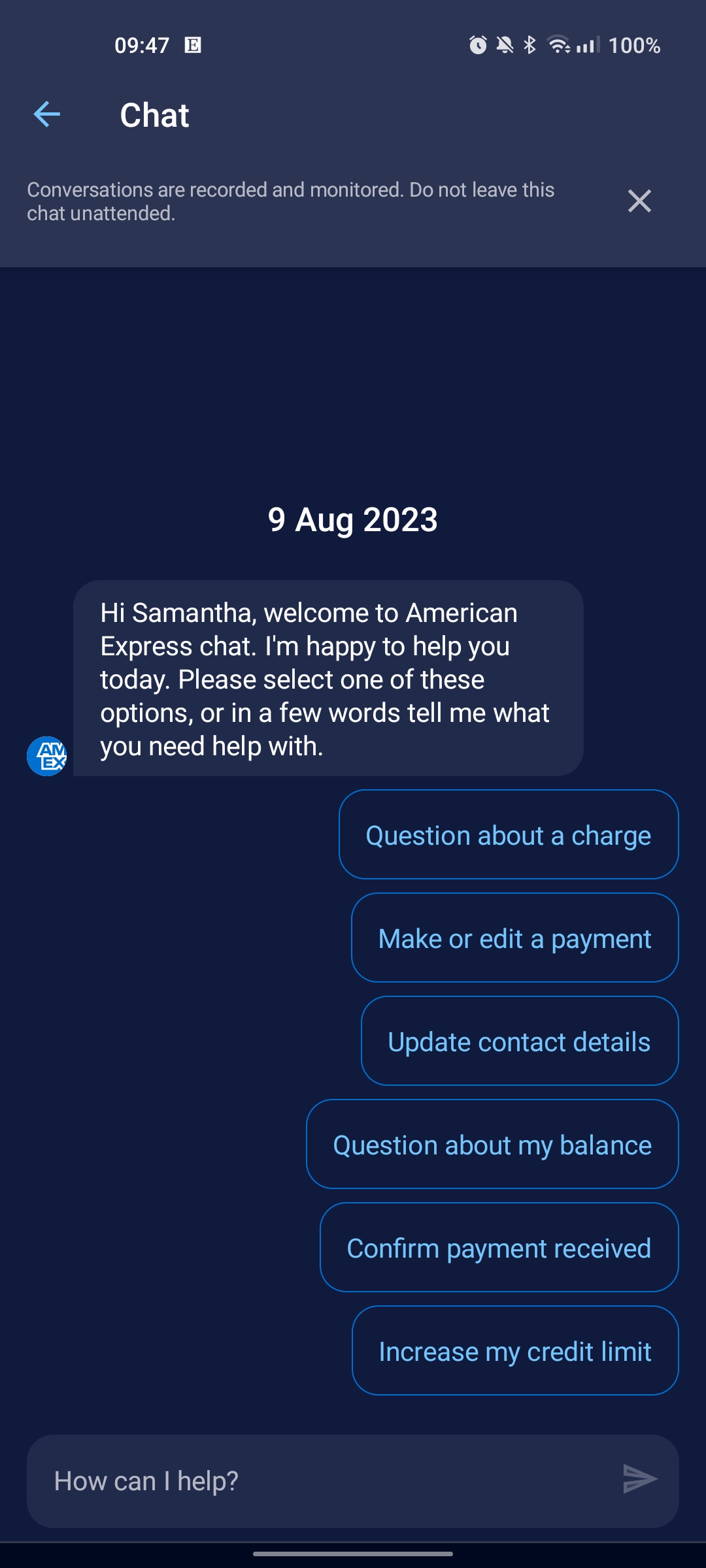
American Express
Competitor analysis: studying topic scoping, conversation design, escalation patterns and agent handoff across B2C live chat.
A strategy worth building on
The MVP launched with native journeys for refund requests, product availability, store services, customer feedback and a mechanism to capture unhandled queries — feeding directly into the future roadmap.
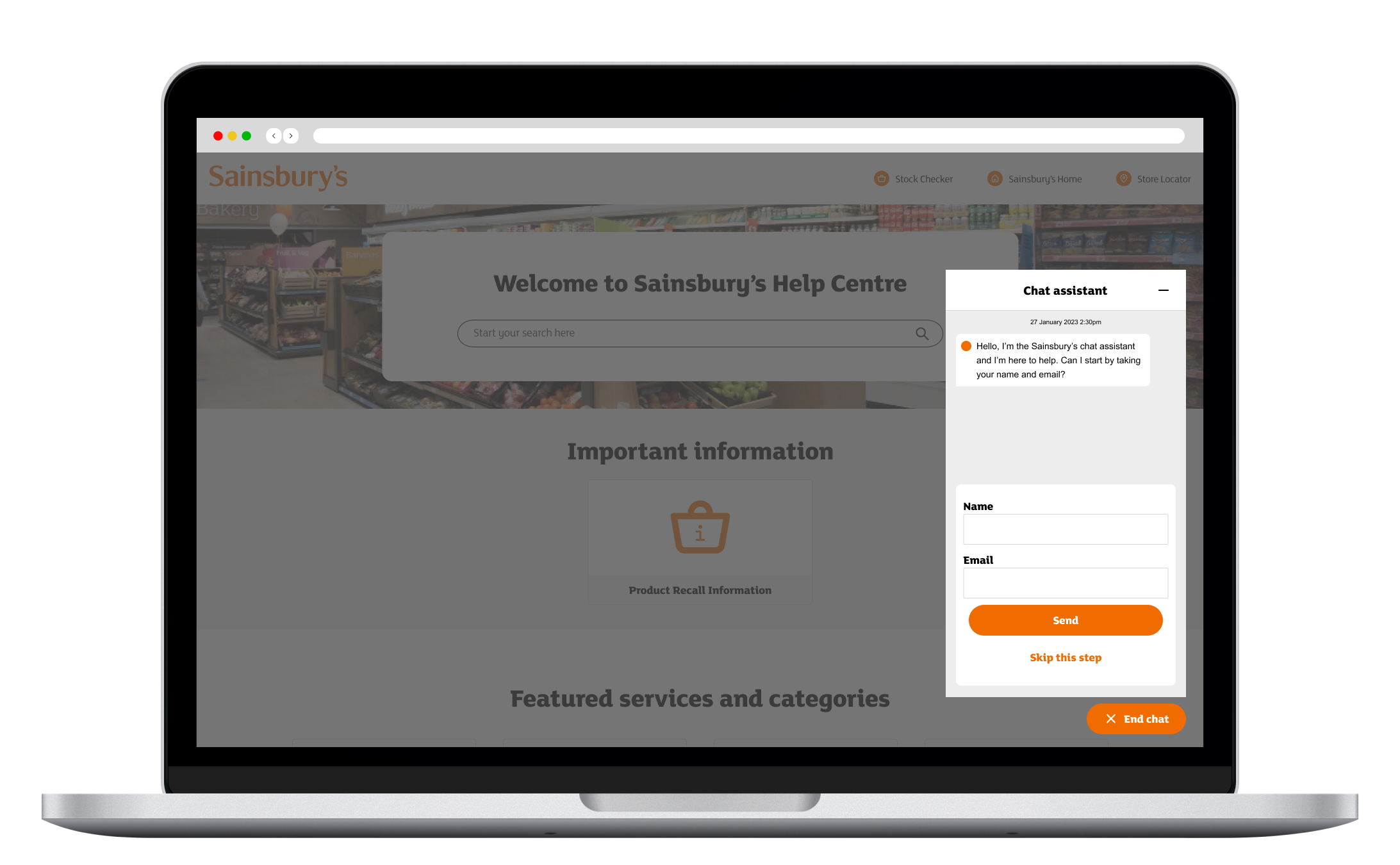
Desktop — chat assistant entry point on the Sainsbury's Help Centre
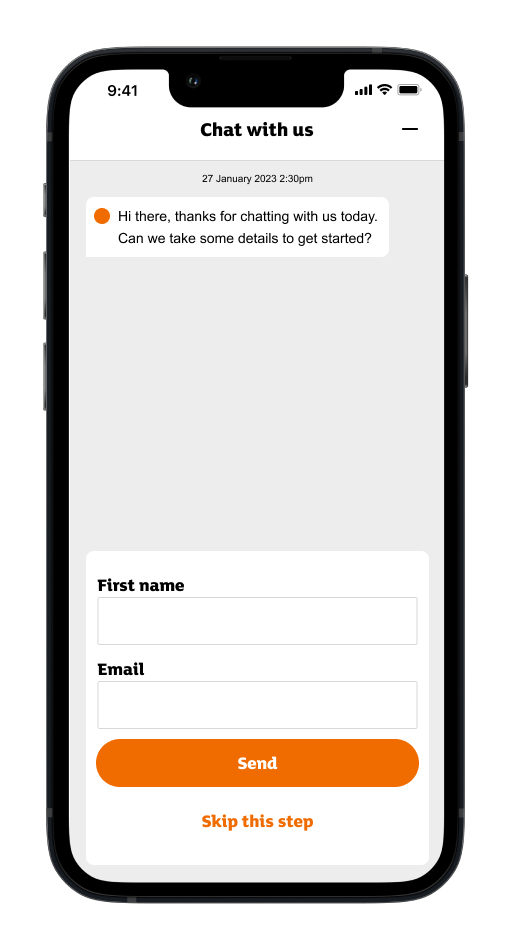
Mobile — native chat entry with pre-chat form
I left Sainsbury's before go-live. What I left behind was a strategy that had been stress-tested, a team aligned behind a defensible approach, and a white-label design ready for Argos and Nectar to eventually adopt. Sometimes the most important design work is the decision you prevent, not just the thing you ship.