The mess is part
of the process.
I'm a Senior Product Designer based in London, specialising in complex products at scale. I think in ecosystems: how does this feature sit within the wider service? How does this interaction affect the team operating it? How does this decision compound over the next three product cycles?
I work best at the intersection of research, strategy and craft — bringing together evidence, stakeholder alignment and rigorous design to build things that hold up under the pressure of real organisations and real users.
My background is a little unusual. Before product design, I spent years in market research, brand consultancy and sponsorship. It taught me to read a room, build trust with senior stakeholders, and ask the questions that unlock a project — not just the obvious ones.
Made carefully. Designed to scale.
I'm pragmatic by nature. I'd rather ship something well-considered and lean than over-engineer a solution that no team can maintain. I start from the problem — not the feature — and I'm most useful when I'm given space to ask uncomfortable questions early.
That means sitting with the mess for a bit. Mapping the full system before proposing the solution. Understanding what the contact centre deals with because this flow doesn't work, or what the HR team has to do manually because this feature wasn't quite designed for them. Good product design, in my view, doesn't end at the screen.
The rigour comes after — in the decisions about what to include and what to leave out, in the details that make something feel considered, in the handoff that means a team can actually build and maintain it. That's what "made carefully" means in practice.
I've led design across consumer retail, HR software and communications — which means I've learned to find the right thread quickly, whatever the problem space.
Where I've worked
Senior Product Designer · Spotted Zebra
Building 0–1 AI-driven hiring tools in the Interview Intelligence space. Designing end-to-end hiring experiences that reduce friction for recruiters and candidates alike — from first signal to final decision.
Lead Product Designer · Sainsbury's
Defined strategy and designed a new live chat channel spanning Sainsbury's, Argos and Nectar. Managed C-suite and Director-level stakeholders through a compressed 9-month delivery cycle.
Lead Product Designer · CharlieHR
Led a team of two designers to build CharlieHR's DE&I product from discovery through to shipped features. Navigated changing stakeholder direction while keeping the product vision intact.
Product Designer · Novastone
Delivered cross-platform UX across iOS, Android and web. Coined 'novaspace' — turning a technical product concept into ownable brand language that worked across enterprise and SaaS user bases.
Market Research · Brand Consultancy · Sponsorship
Years of asking better questions, translating evidence into strategy, and earning trust with senior stakeholders. It turns out this is more useful in product design than most people expect.
Outside work,
I make things.
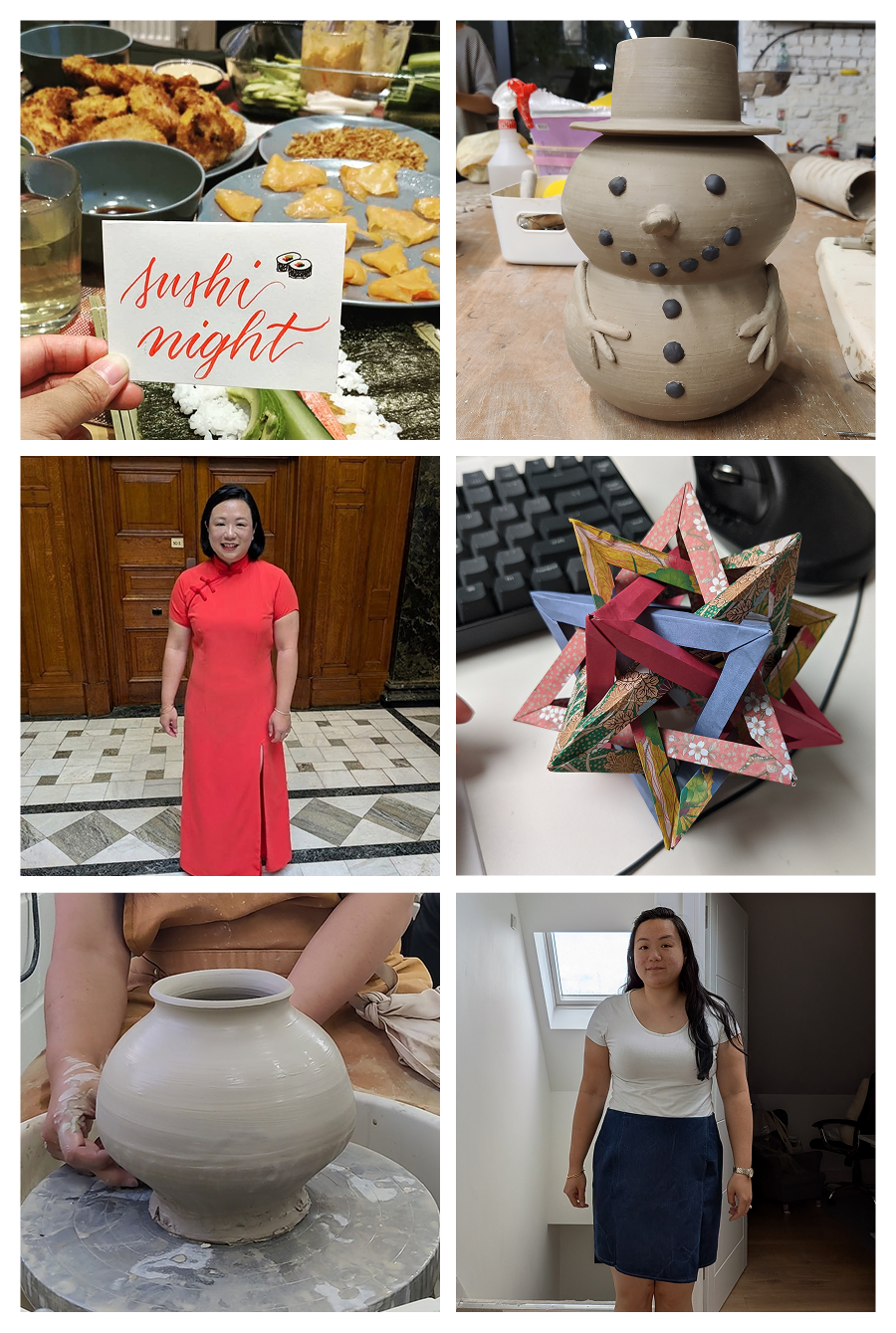
I letter, I throw pots, I hand-build, I sew. These aren't hobbies in the background — they're the same practice as my design work, just in different materials.
Every making discipline is process-first. You don't get to skip the awkward middle part where the clay collapses or the seam doesn't sit right. You have to feel your way through it, adjust, and go again. That's how I approach a product problem too.
Craft teaches you to respect material constraints, to work iteratively, and to find the solution that's right for the thing you're making — not the one that looks good in a brief. It also teaches patience with ambiguity, which turns out to be one of the most useful skills in a complex organisation.